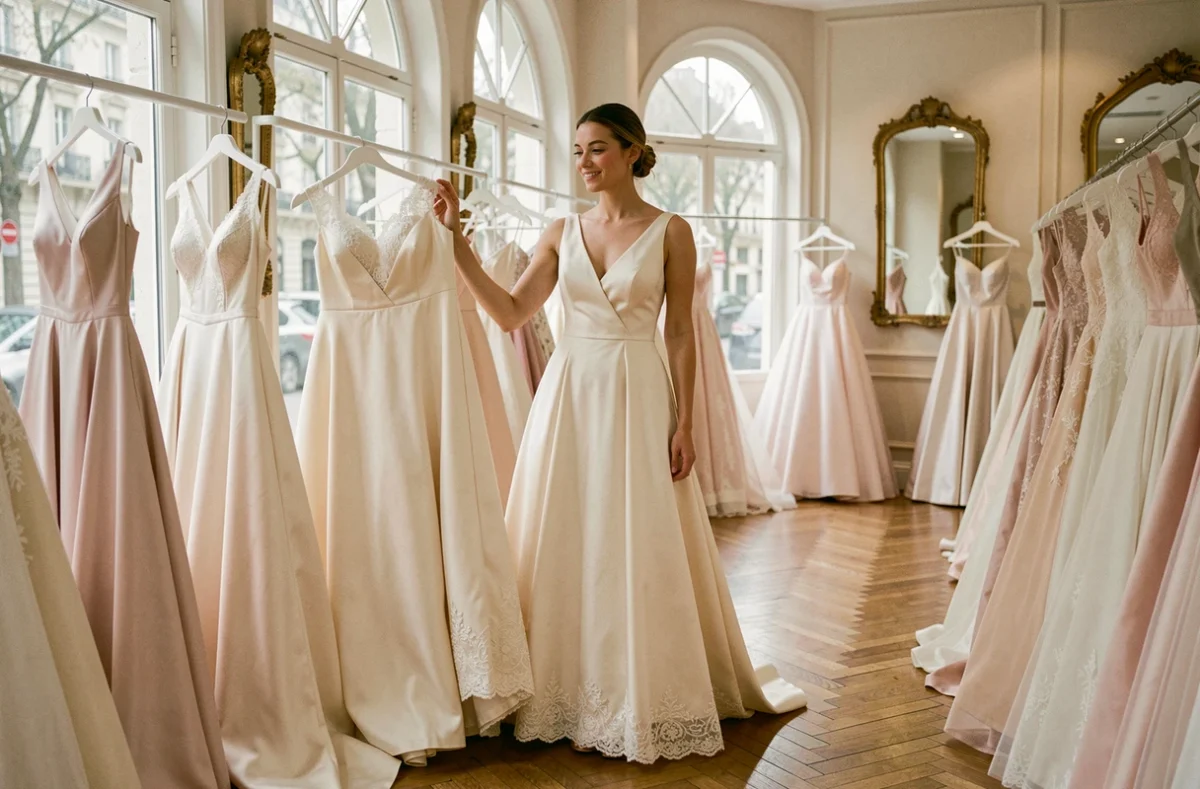
Weddings as they are planned today no longer follow the same pattern as they did ten years ago. The average age of couples getting married in France continues to rise, most already live together, and many have children before the ceremony. These demographic realities are reshaping wedding trends: celebrations are adapting to lives that are already established, rather than marking a starting point.
Weddings and logistics: the environmental impact beyond the décor
Articles about wedding trends almost always cover seasonal flowers, reusable tableware or invitations made from recycled paper. These choices matter, but they have little impact compared with the biggest source of emissions: transportation for guests and vendors.
Holding the ceremony, reception and accommodation at the same venue significantly reduces travel. This logistical choice has a tangible effect on a wedding’s carbon footprint—far greater than replacing a disposable tablecloth with a linen one.
Among Madame Dentelle’s latest news, this approach comes up regularly: think of wedding planning as a coherent whole, where every practical decision also supports an environmental goal. Couples who choose a venue with on-site accommodation, for example, make the day easier for their guests while limiting travel.
Wedding color palettes: what’s replacing all-white
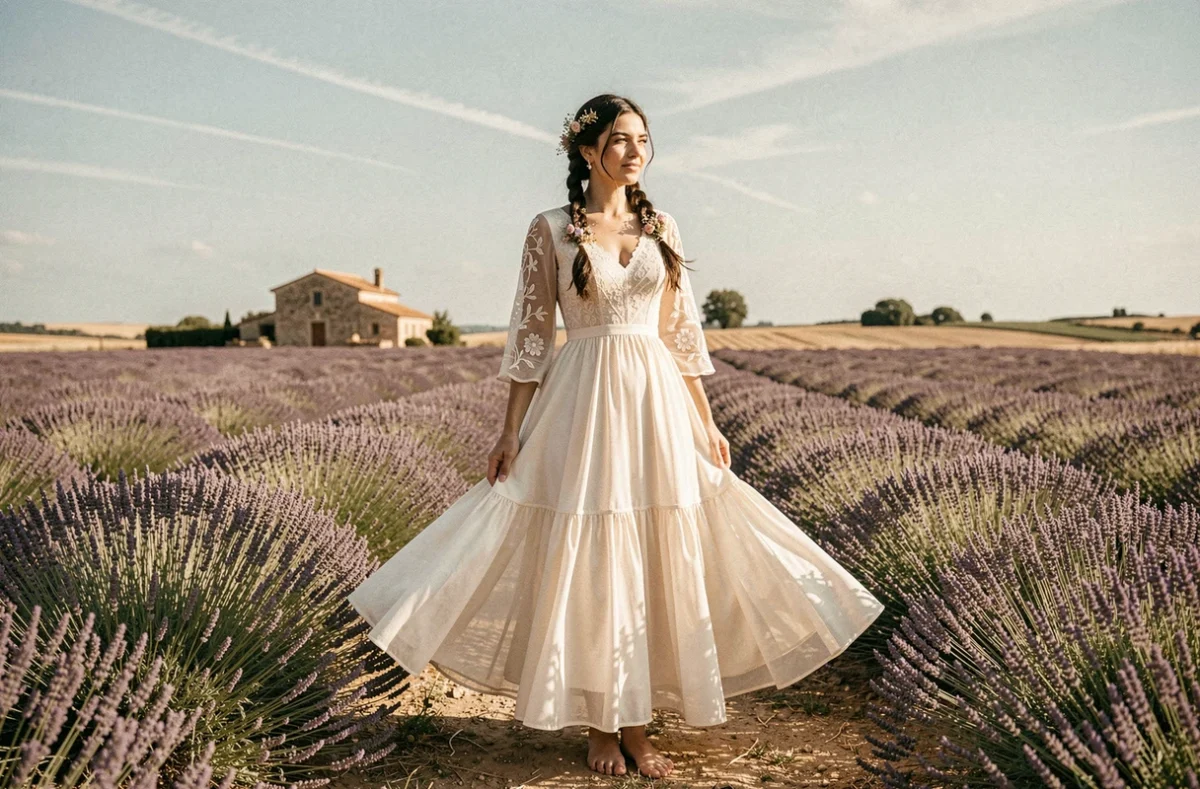
All-white hasn’t disappeared, but it’s becoming less popular. The palettes dominating recent weddings favor earthy, botanical color combinations. Sage green, terracotta and golden ochre feature in most inspiration boards.
Dusty coral and slate blue make an unexpected pairing that works just as well in summer as in fall. These shades can be used for stationery, floral arrangements and the wedding party’s outfits, creating a cohesive look throughout the day.
Festive, multicolored styling is gaining ground among couples who want to move away from understated décor. Mixing three or four bold colors across the tables, arches and accessories creates a joyful look, as long as there’s a common thread—such as a material, pattern or similar level of intensity.
Colors and visual consistency across vendors
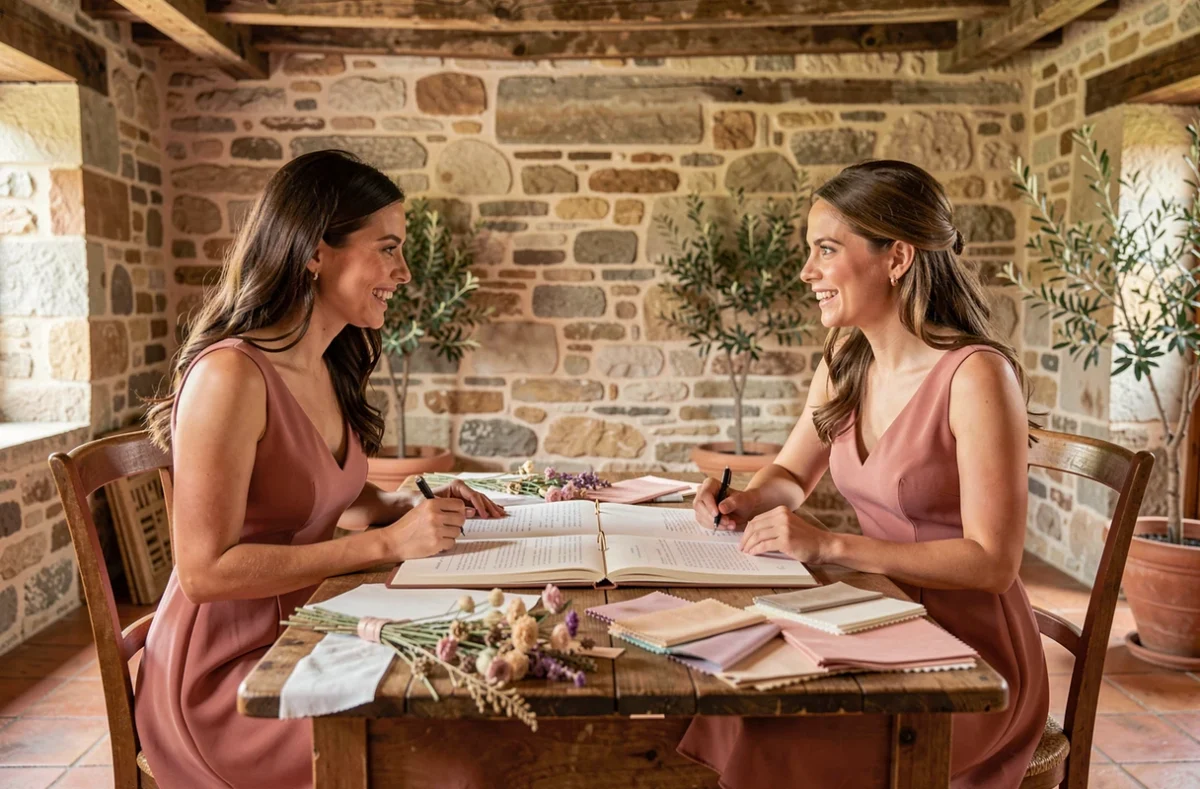
A common pitfall is choosing a palette without sharing the details with every vendor. Florists, caterers and photographers often work independently. Providing a single visual guide (a mood board with Pantone references or physical swatches) helps prevent color mismatches on the big day.
Wedding flowers: sculptural, locally sourced arrangements
Round, compact bouquets are giving way to asymmetrical, sculptural floral arrangements. Long stems, wild foliage and dried grasses are combined with fresh flowers to create volume and movement.
This style calls for a different approach from the florist. Sculptural arrangements take longer to assemble and require suitable support structures, which is reflected in the quote.
- Local, seasonal flowers: they cost less to transport, last longer and support a more sustainable approach. An October wedding in Île-de-France could feature dahlias, cosmos and ornamental grasses.
- Dried flowers as accents: they make it possible to prepare some of the décor several weeks in advance and keep a lasting memento.
- Hanging installations: traditional floral arches are making way for arrangements suspended above the tables, freeing up space and creating an immersive effect.
Comparing wedding vendor quotes: what the listed price doesn’t tell you
Comparisons between wedding vendor quotes often focus solely on the total price. This can hide significant differences. Travel fees, overtime and cancellation terms can change the final cost, sometimes substantially.
A photographer with an attractive rate who charges for every hour beyond eight hours of coverage may end up costing more than a competitor whose package covers the entire day. The same applies to caterers (number of servers included, cleaning fees) and DJs (whether sound equipment is provided or costs extra).
- Always ask for an itemized quote, with a clear breakdown of included and excluded options.
- Check the cancellation or postponement terms: some vendors keep the entire deposit, while others allow you to reschedule at no extra cost.
- Ask about equipment: tables, chairs, tablecloths, sound systems and lighting. Anything not included in the reception venue’s quote will incur an additional rental fee.
A realistic wedding budget includes indirect costs
Guest accommodation, tips, administrative fees for the town hall or celebrant, makeup and hair trials: these costs add up. Building a buffer into the overall budget helps cover them without having to sacrifice an important part of the day.
A wedding that reflects a life already shared
The underlying trend running through all the others is the move away from weddings as a beginning. Insee data confirms that most couples getting married in France already live together. Many are celebrating a well-established relationship, sometimes with their children at the ceremony.
This reality changes the very nature of the celebration. Ceremonies include the couple’s children in the rituals, with family vows and inclusive processions. Activities are adapted too, with dedicated spaces for younger guests and schedules designed with families in mind.
The wedding style then reflects a shared everyday life rather than an imagined ideal. Couples choose a venue that feels like them, vendors whose values they share, and an atmosphere that extends the life they already have together. The most enduring trend isn’t a color or a bouquet style: it’s the harmony between the celebration and the couple’s real life.