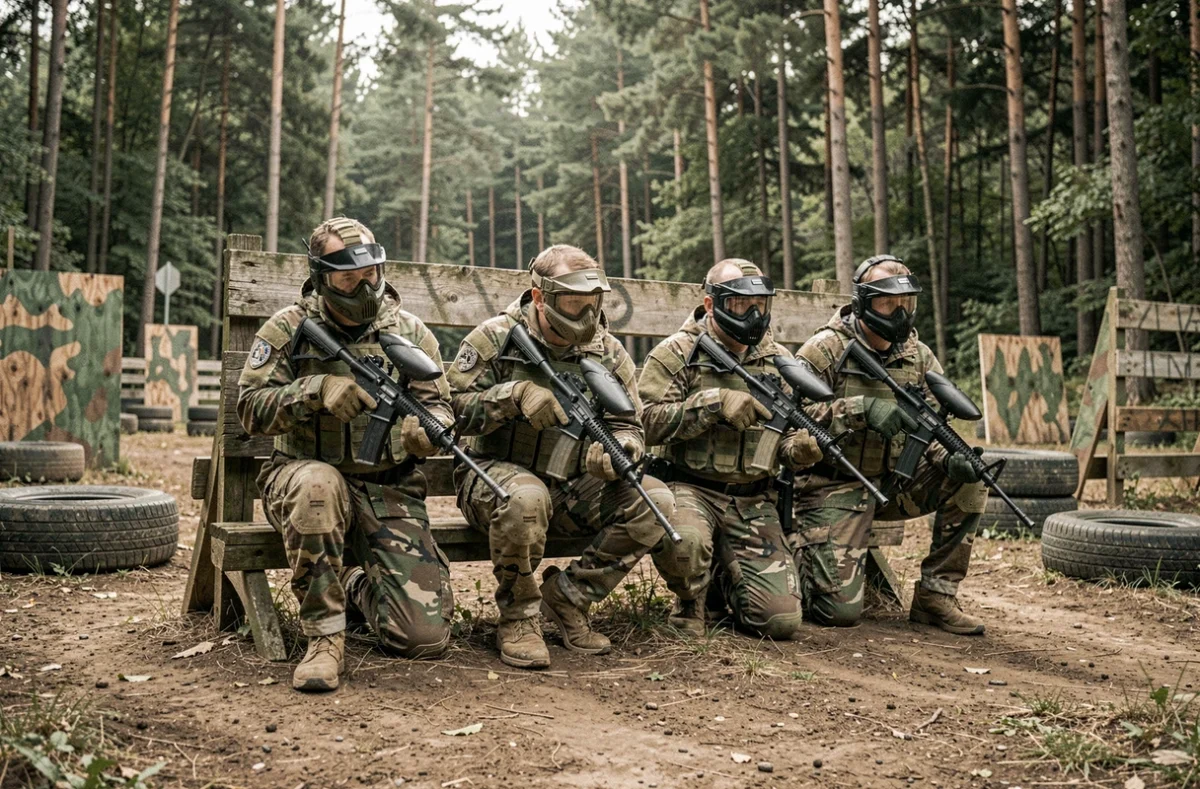
Airsoft is attracting a growing community in France, structured around 1901 law associations and a few still-rare commercial structures. Creating a dedicated field involves navigating land-use, regulatory, and community constraints that traditional planning guides rarely address from a profitability perspective. The legal framework remains fragmented: several federations coexist (FFA, FédéGN), none are mandatory, and the insurance regime varies depending on the chosen status.
Noise nuisances and neighbors: the risk that operators underestimate
Most project leaders focus on the development permit or the delineation of the land. The real point of friction, over time, often comes from nearby residents. Noise regulations are not limited to nighttime prohibitions: the duration, repetition, and intensity of sounds can constitute a disturbance to the tranquility of the neighborhood even during the day.
A field located near residences, with regular activities on weekends, generates cumulative noise that neighbors can contest in court. Choosing a site far away or nestled in a wooded area is not always sufficient: it is also necessary to document game times and provide rest periods.
Since the law of April 15, 2024, Article 1253 of the Civil Code provides for an exception related to prior activities, but under strict conditions. The activity must comply with current regulations and not have exacerbated the disturbance. The age of the field does not automatically protect against neighborhood conflicts. An operator who changes their hours, increases the frequency of games, or installs new noisy structures (generators, sound systems for scenarios) loses this legal shield.
Before signing a lease or purchasing land, it is wise to check the proximity of the nearest residences, road access (the noise from vehicles also counts), and the zoning classification in the local urban planning plan. For those looking to create a profitable airsoft field, this land analysis conditions the project’s medium-term viability.
Airsoft field insurance: what the legal structure changes concretely
The choice between a 1901 law association and a commercial company is not just a matter of taxation. It determines the type of coverage to subscribe to and the obligations towards players.
An association that organizes games open to non-members finds itself in an insurance gray area. Classic associative civil liability covers members, but not necessarily occasional participants. The insurance regime depends on the structure and the activity, and must be confirmed by the insurer before the first game open to the public.
- An association affiliated with the FFA benefits from a federal framework that includes coverage for its licensees, but non-licensees present on the field remain a blind spot to verify.
- A micro-enterprise or a SAS that charges for entry must subscribe to professional liability insurance, the cost of which varies depending on the size of the field and the number of players hosted simultaneously.
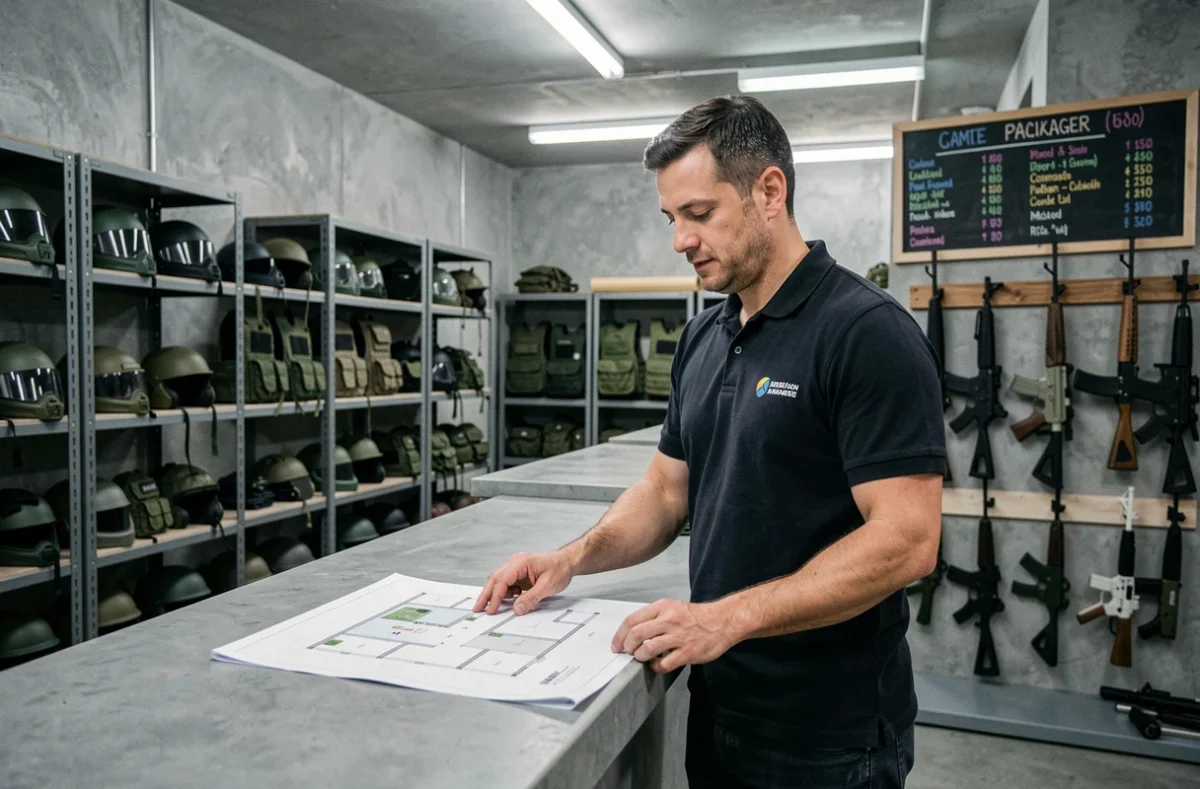
- Renting replicas to beginners adds a layer of responsibility: in case of injury related to borrowed equipment, the operator may be held liable if maintenance or safety briefing is insufficient.
Having the insurance contract validated by a broker specialized in sports leisure activities avoids unpleasant surprises in the event of a claim.
Field development: balancing immersion and maintenance costs
An attractive airsoft field relies on a balance between the complexity of the decor and ease of maintenance. Operators who invest heavily in wooden modules or pallet structures often discover that the annual maintenance cost exceeds the initial investment after a few seasons.
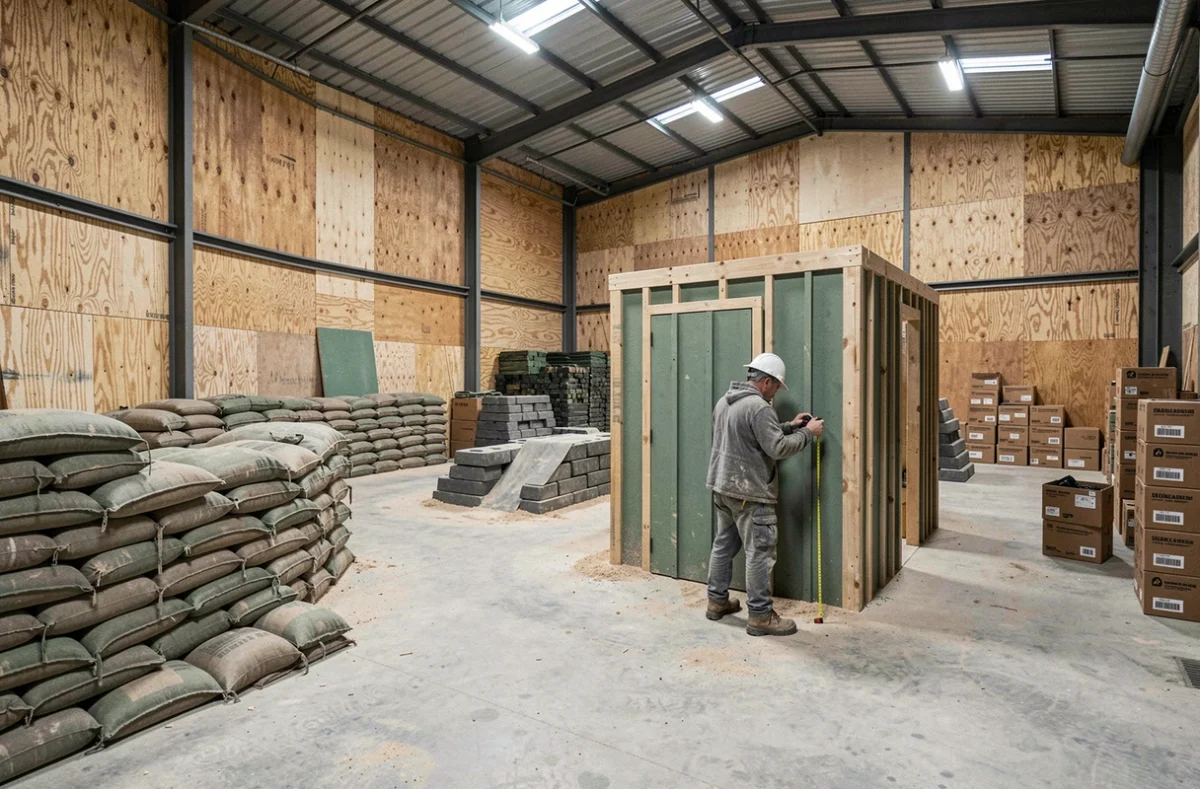
Untreated wood degrades quickly under the elements. Tarps tear. Trenches fill with water. Rather than multiplying constructions, some profitable fields rely on movable modular elements (barrels, big bags filled with sand, removable panels) that allow for renewing game configurations without rebuilding.
Forest field or indoor CQB field
A forest field offers an immersive setting at a lower development cost but poses access and safety constraints (delineation over large areas, risk of intrusion by walkers). An indoor CQB field guarantees total control of the space but requires rent or real estate purchase, plus compliance with ERP standards if the venue receives the public.
Profitability depends less on the type of field than on its regular attendance. A free but poorly served forest site, open two Sundays a month, will generate less revenue than a rented warehouse in a semi-urban area accessible by transport, open every weekend.
Player retention in airsoft: what makes a community return
Attracting players for a first game is not the most difficult part. Retaining them over time requires working on three levers often overlooked by new operators.
- Scenario rotation: replaying the same map with the same rules quickly bores regular players. Publishing a calendar with varied game modes (capture, escort, light milsim) maintains interest.
- Level management: mixing beginners and experienced players without adapting the rules (power limits, respawn zones) discourages newcomers. Fields that segment their slots by skill level show a better return rate.
- Community communication: an active group on social media or dedicated platforms (forums, Discord) where players exchange after games creates a bond that goes beyond the simple sports meeting.
Organizing occasional events (night games, themed scenarios over a weekend) generates word-of-mouth and attracts players from outside the local community. Events often represent the main lever for acquiring new players.
A viable airsoft field relies on a triptych of land, legal, and community factors. Neglecting neighborhood or insurance constraints exposes the operator to administrative closures or costly disputes. Profitability is built on regular attendance, not on the size of the field or the number of obstacles installed.