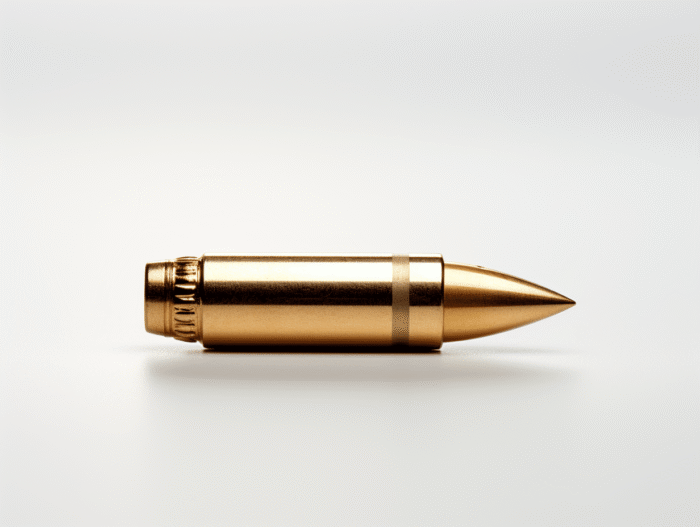
The 9mm ammunition, standardized and popular among law enforcement and firearms enthusiasts, is often scrutinized for its ballistic capabilities. The performance of these cartridges, crucial for effectiveness and safety, is impacted by constant innovations in the design of modern firearms. Manufacturers compete in ingenuity to improve the accuracy, penetration, and stopping power of ammunition while considering legal and ethical implications. This thorough examination of the technical characteristics and operational efficiency of 9mm ammunition in contemporary firearms reveals significant advancements and their repercussions for users.
Technical Characteristics and Evolution of 9mm Ammunition
The 9 × 19 mm Parabellum, also known as 9 mm Luger, 9 mm NATO, or simply 9 mm, stands as the most widely used cartridge caliber for handguns worldwide. Originally designed by the German Empire, this caliber has evolved over time, adapting to the increasing demands for performance. Its rimless design and stable dimensions – a projectile diameter of 9.01 mm and a cartridge length of 29.7 mm – ensure extensive compatibility with many modern firearms.
Consider the technical measurements: the velocity of a 9mm bullet ranges from 330 to 400 m/s at the muzzle, producing an energy of 480 to 550 joules depending on the cartridge weight, which is approximately 12 grams. These characteristics provide the 9 mm Parabellum with a balance between maneuverability and firepower. The maximum gas pressure tolerated by this ammunition is 2,350 bars, indicating its robustness and reliability under various usage conditions.
The history of the 9 mm Parabellum is inseparable from military and technological advancements. Inspired by the Borchardt C-93, it equipped the Kaiserliche Marine and the Deutsches Heer before serving in the design of iconic weapons such as the British Sten submachine gun. This evolution illustrates the caliber’s adaptability to diverse operational contexts, contributing to its longevity and adoption as standard ammunition by NATO and the United States. The 9 mm Parabellum continues to leave its mark on the light weapons sector.
Performance Evaluation and Comparison in Different Usage Contexts
The 9 × 19 mm Parabellum, a cartridge caliber standardized by NATO and the United States since 1985, is subject to rigorous performance evaluation. In the context of law enforcement and sporting shooting practices, 9mm ammunition proves to be remarkably effective. Their ability to reach speeds of up to 400 m/s at the muzzle, combined with a projectile energy ranging from 480 to 550 joules, positions them as a benchmark in terms of ballistics for handguns.
Compared to other calibers available on the market, the 9 mm Parabellum stands out for its optimal balance between power and controllability. Follow comparative analyses that demonstrate that, despite the existence of more powerful or lighter ammunition, the 9mm retains a prominent place due to its versatility and compatibility with a wide range of firearms. This adaptability translates into consistent performance, whether in law enforcement operations or in sporting competitions where precision and reliability are paramount.
Address the issue of 9mm ammunition from the perspective of terminal ballistics. Data collected in the field reveals that the 9 × 19 mm Parabellum ensures adequate expansion and penetration, decisive criteria for effectiveness in real-world situations. This balance between various ballistic characteristics confirms the status of the 9mm as the preferred ammunition for a wide range of applications, from personal defense to professional tactical use.