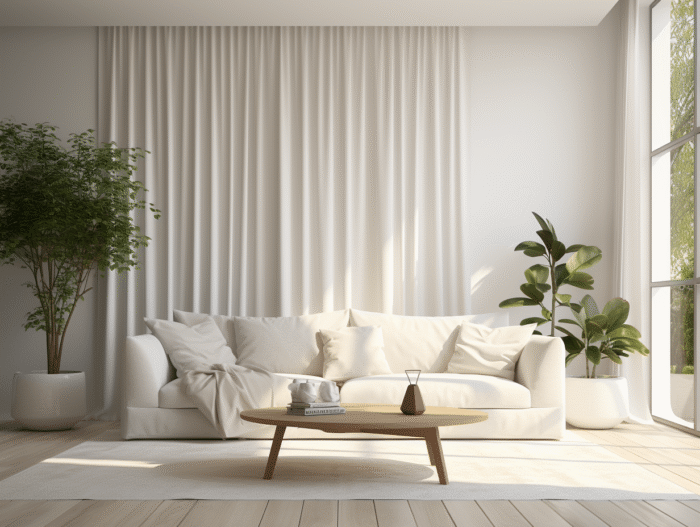
The choice of colors in carpentry shapes the aesthetic of a home and influences its overall ambiance. White, often associated with purity and clarity, brings brightness and a sense of space, easily integrating into various decorative styles. In contrast, anthracite, a sober and elegant shade, adds a touch of modernity and character while enhancing architectural elements. These two hues have distinct advantages, capable of transforming the visual appearance of both interiors and exteriors. Their impact on the aesthetics of a home is undeniable, but their choice depends on the desired effect and the personality of the spaces to be dressed.
Aesthetics and Harmony: The Role of Colors in Carpentry
The architectural harmony and residential aesthetics inevitably go through a wise choice of colors in carpentry. White, a symbol of purity and brightness, is a safe bet for a white carpentry house looking to capture light and create a sense of timelessness. This shade easily blends with both traditional and contemporary architecture, offering a perception of expanded space and a neutral backdrop that welcomes any decorative style.
In contrast, anthracite embodies modernity and character. This color, favored for its elegance, proves to be a preferred choice for those aspiring to a touch of distinction and sobriety. The assertive character of anthracite enhances architecture, highlighting the lines and shapes of buildings while harmonizing with raw materials such as stone or steel. For lovers of a contemporary aesthetic, anthracite is a visual signature that does not go unnoticed.
Advice for harmonizing colors in carpentry cannot be given without reflecting on the aesthetic impact they exert. Be sure to consider the architectural integration of the carpentry and its dialogue with the environment. Whether you opt for white or anthracite, customization and the current trend towards two-tone designs offer endless possibilities for each home to reflect the identity of its occupants and blend into the surrounding urban or natural landscape.

White vs Anthracite: Analysis of Trends and Impact on Habitat
The intertwining of color trends and material performance guides the carpentry market towards distinct preferences. In PVC, where durability and low maintenance are key, white remains a classic, embodying neutrality and adaptability to various architectural styles. Aluminum, prized for its contemporary aesthetic, is often chosen in anthracite, a color that, although prone to visible marks and dirt, provides a distinct touch of modernism.
The thermal performance and resistance of materials are intrinsically linked to color. White reflects light and heat, contributing to better thermal insulation, in accordance with current standards. Anthracite, on the other hand, may require more rigorous maintenance, as marks are more noticeable on this dark shade. The choice of colors thus also depends on the willingness for long-term upkeep.
The regulation, particularly that dictated by the Local Urban Planning Plan (PLU), strongly influences the color choices in carpentry. Restrictions may be imposed to preserve the architectural charm of certain neighborhoods or regions, which can limit the use of anthracite or encourage white. Consulting the RAL color chart then becomes a key tool for the precise determination of permitted shades.
Commercially, the color trend in carpentry shows a clear preference for two-tone designs, allowing homeowners to combine the elegance of anthracite on the facade with the brightness of white indoors. This duality responds to a growing demand for personalized solutions tailored to the practical considerations of daily life, while also taking into account the potential impact on the resale of the property. Color in carpentry thus stands as a strategic component, both for residential comfort and for enhancing property value.