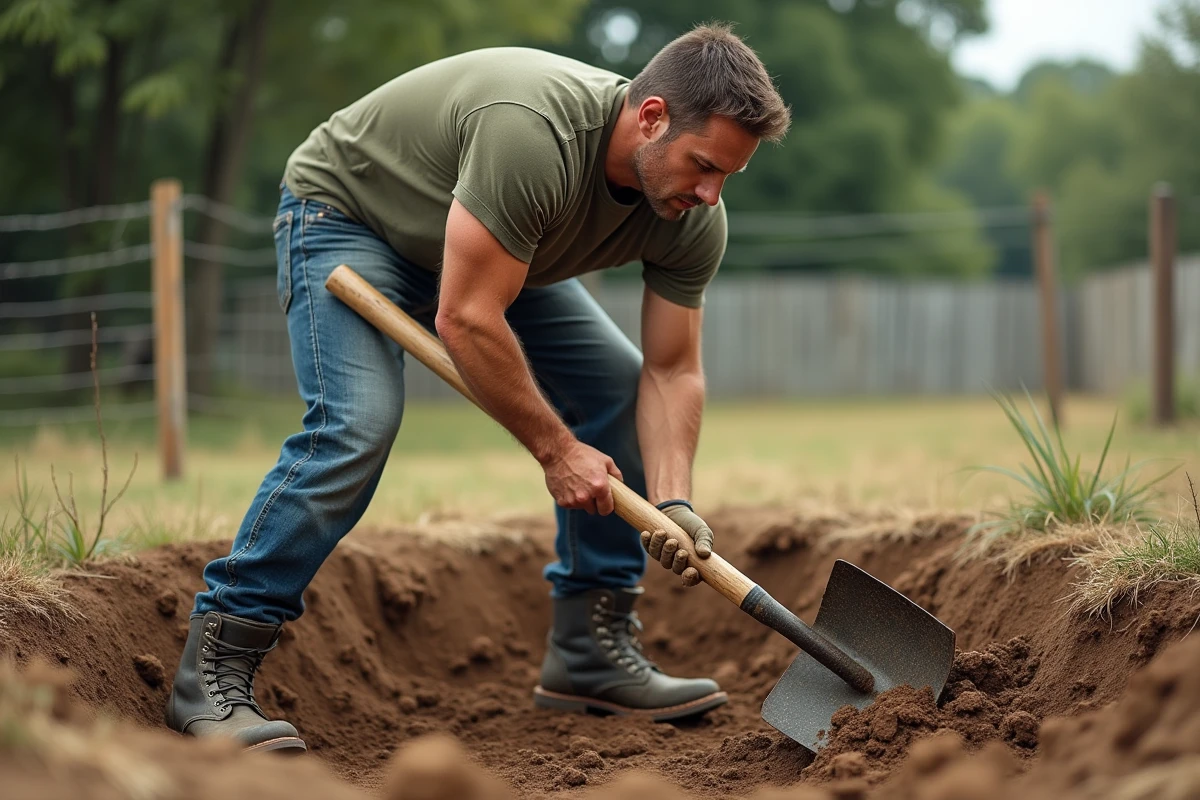
On a fencing site or in the garden, the difference between an hour of struggle and thirty minutes of clean work rarely comes down to physical strength. It depends on how you approach the ground, the timing, and a few gestures that most DIYers discover after straining their backs. We’ll review the approaches that truly make a difference when you need to dig a hole with a shovel.
Read the soil before planting the shovel
Before making the first strike, scrape the surface for about twenty centimeters with the edge of the shovel. This quick test reveals the nature of the terrain: loose soil, compact clay, gravel, roots. Adapting your technique to this reality prevents breaking a handle or exhausting yourself on ground that requires a complementary tool like a pickaxe.
A dry clay soil is as resistant as a brick wall. If you can delay digging after a light rain, wet soil cuts much more easily than dry soil. On a fence post site in the middle of summer, watering the area the night before saves a considerable amount of time.
The CARSAT Rhône-Alpes also reminds us, in its summer 2023 prevention campaign, that high temperatures increase the risk of heat strokes during manual excavation. Starting early in the morning, before the ground hardens and the temperature rises, combines efficiency and safety. Several techniques for digging a hole with a shovel are based on this logic of preparing the ground rather than relying solely on brute force.
Posture and gestures for digging a hole without destroying your back
The natural gesture is to lean forward, push the shovel in, and lift the soil by pulling with your arms. This is the best way to end up with lower back pain after ten holes.
Place one foot on the upper edge of the blade and use your body weight to push the tool in. Keep your back straight; your legs do the work. When lifting the soil, bend your knees and keep the load close to your body. This transfer of effort from the back to the legs changes the game over a full day of work.
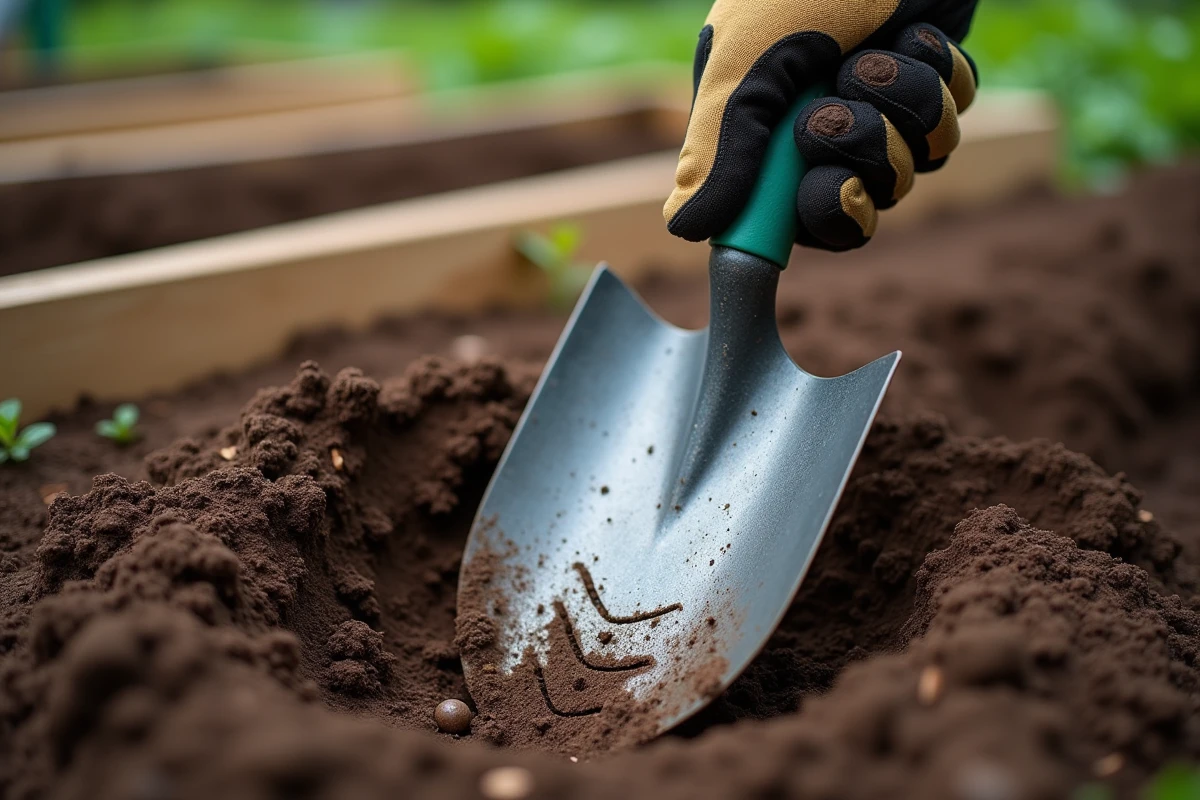
The handle plays a direct role in the quality of the gesture. Shovels with a curved handle or D-grip, developed notably by Fiskars and Leborgne in recent years, reduce back bending and shoulder strain. Tests by the INRS published in 2022 confirm this measured reduction in lumbar stress. If you dig regularly, investing in an ergonomic shovel pays off from the first job.
Cutting and extracting: the method that speeds up work in the garden
The reflex to dig in a circle, shovelful after shovelful, produces a hole with irregular walls and a pile of soil that constantly rolls back into the hole. Time is wasted clearing what just fell.
Cut before extracting
First, outline the perimeter of the hole by pushing the blade vertically all around, as if you were cutting a cake. Then, score the soil inside by creating a grid of perpendicular lines. You’ll get blocks that the shovel can lift in one go, without scraping effort.
- Push the shovel vertically around the entire perimeter, at regular intervals of the blade’s width.
- Grid the inside of the hole with crossed lines to create compact blocks of soil.
- Extract the blocks one by one by sliding the shovel under each, starting from the center.
- Throw the soil upstream of the hole (on the side opposite to your position) to prevent it from falling back in.
This approach works particularly well in loose garden soils and topsoil. Cutting then extracting divides the digging time compared to continuous shoveling.
Manage depth beyond the blade height
After a certain depth, the standard shovel reaches its limits: you can no longer pivot the handle in the tight space of the hole. There are two practical options. Either slightly widen the opening at an angle (inverted cone shape) to maintain a working angle, or switch to a manual auger for fence post holes that require a precise diameter and significant depth.
Opinions vary on this point: some prefer to widen the hole, while others believe that a gas or electric auger saves so much time that it justifies renting one. In rocky soil, the auger alone is not sufficient, and the shovel remains essential for clearing stones.
Checking buried networks: a step that conditions everything else
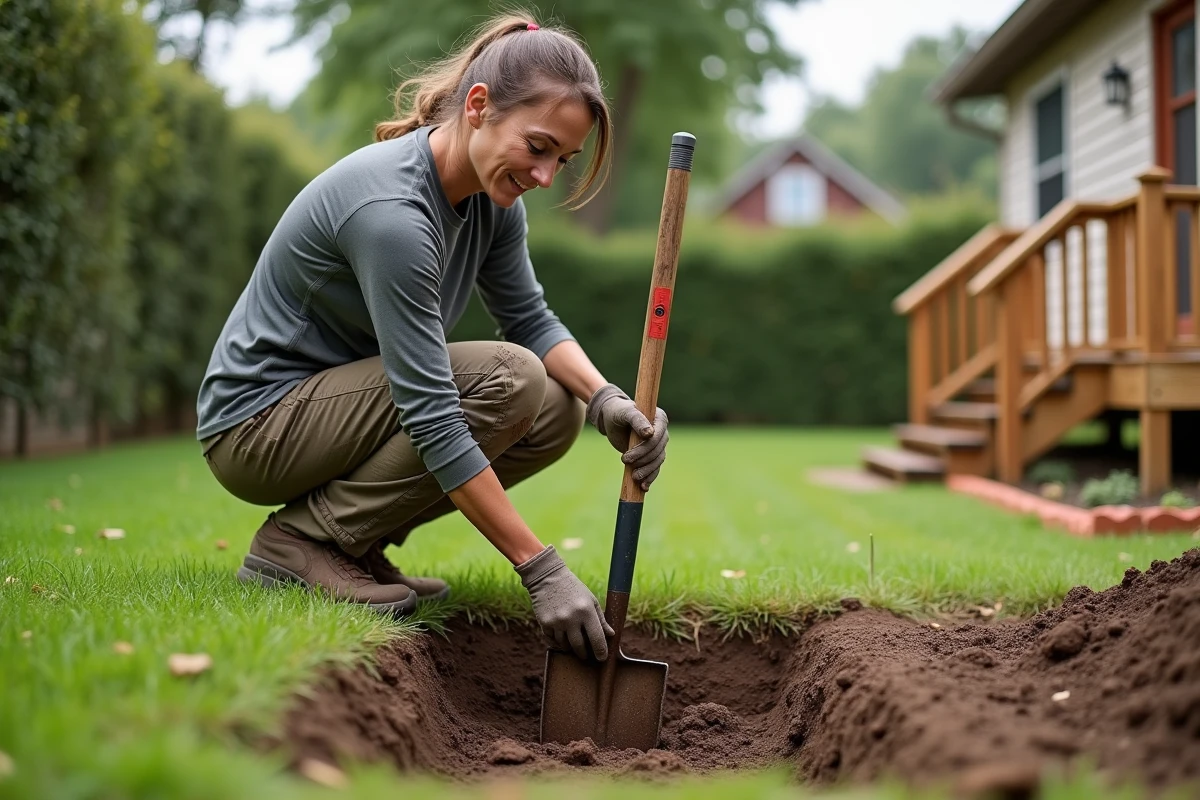
This point is often overlooked in gardening tutorials, but it determines the feasibility of the project. Since the 2023 update of the application guide for damage prevention regulations (INERIS, 2024 edition), even manual shovel work is no longer exempt from prior verification when it is located in public areas or in presumed proximity to pipelines.
Specifically, before digging holes for a fence on property lines, a work declaration (DT/DICT) via the portal reseaux-et-canalisations.gouv.fr may be necessary. Cutting an electric cable or piercing a gas line with a shovel remains an accident that occurs every year on domestic projects.
Shovel maintenance and optimal soil conditions
A dull blade forces you to exert more effort with each strike. Sharpening the edge of the shovel with a file before a digging session reduces the effort needed to penetrate the soil. A quick five-minute pass is sufficient.
Clean the blade after each use, especially in clayey terrain. Dried clay on the metal creates a layer that weighs down the tool and reduces its penetration capacity. A spray of water and a brush with metal bristles prevent this issue.
The choice between a round shovel and a square shovel depends on the type of hole. The round shovel penetrates hard soils better and is suitable for planting holes. The square shovel moves more volume and excels for trenches or wide holes in loose soil. On a mixed garden site, having both on hand prevents you from struggling with an unsuitable tool.
The speed of digging relies less on the intensity of effort than on soil preparation, the right tool, and a gesture that preserves the body. A well-cut hole, in properly moistened soil, with a sharpened and ergonomic shovel, can be dug in a fraction of the time it would take with chaotic shoveling in dry soil.