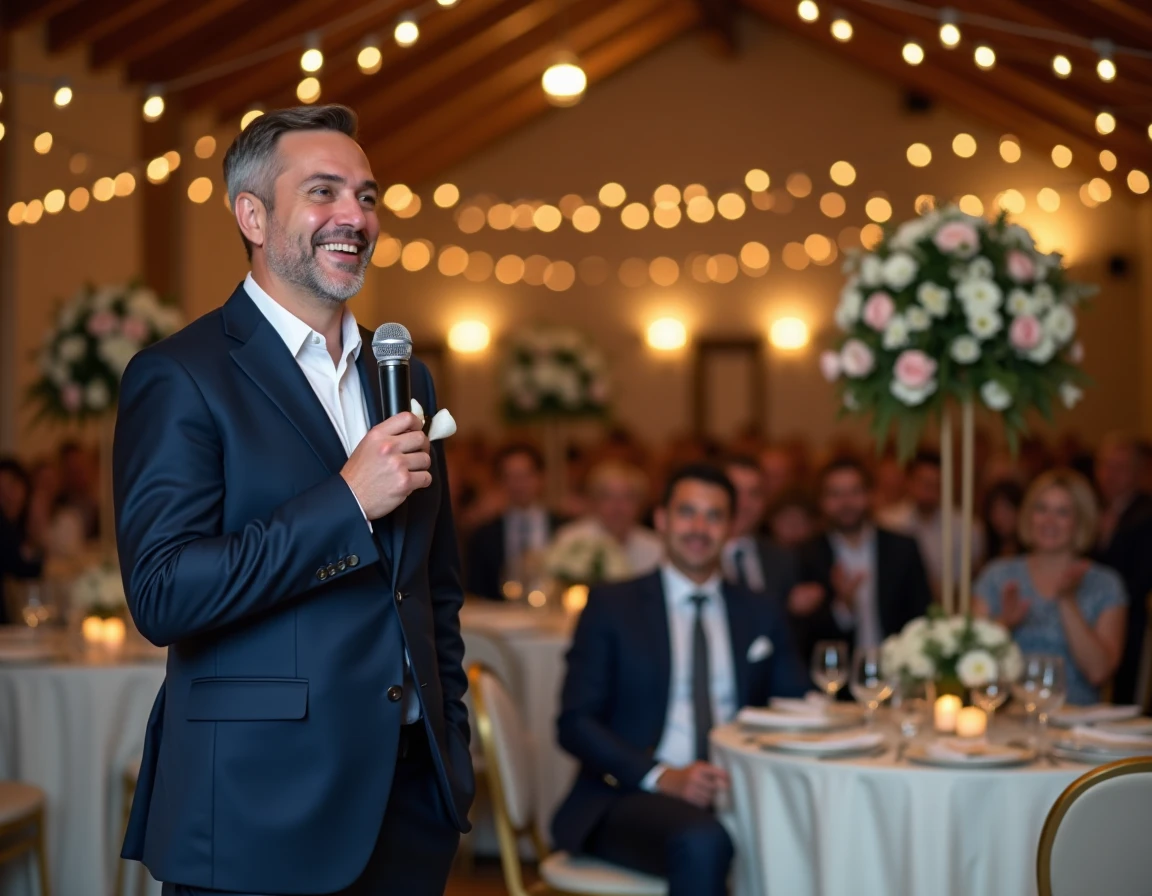
The entertainment at a wedding is not just about a playlist and a few games between courses. The choice of formats, their sequence throughout the evening, and the level of guest involvement determine the overall energy of the celebration. Feedback from the field varies on this point: some couples opt for a single provider who manages everything, while others prefer to combine several short performances. Both approaches work, provided you understand what truly sustains an event over time.
Participatory entertainment or passive show: how the format changes things
The recent trend in weddings moves away from a show that you watch while seated. Formats that involve the guests themselves, such as a live juke-box, jam sessions, or open mic, are gaining ground. This shift reflects a desire for collective atmosphere rather than mere passive entertainment.
A close-up magician or a live painter captures attention but does not create connections between tables. In contrast, a team blind test or an escape game mixes groups of guests who do not know each other. The participatory format creates bonds between tables, whereas the show remains an individual interlude.
To explore the available options and compare formats, wedding entertainment on Les Mariés de Sylvie gathers categories of providers with their specificities.
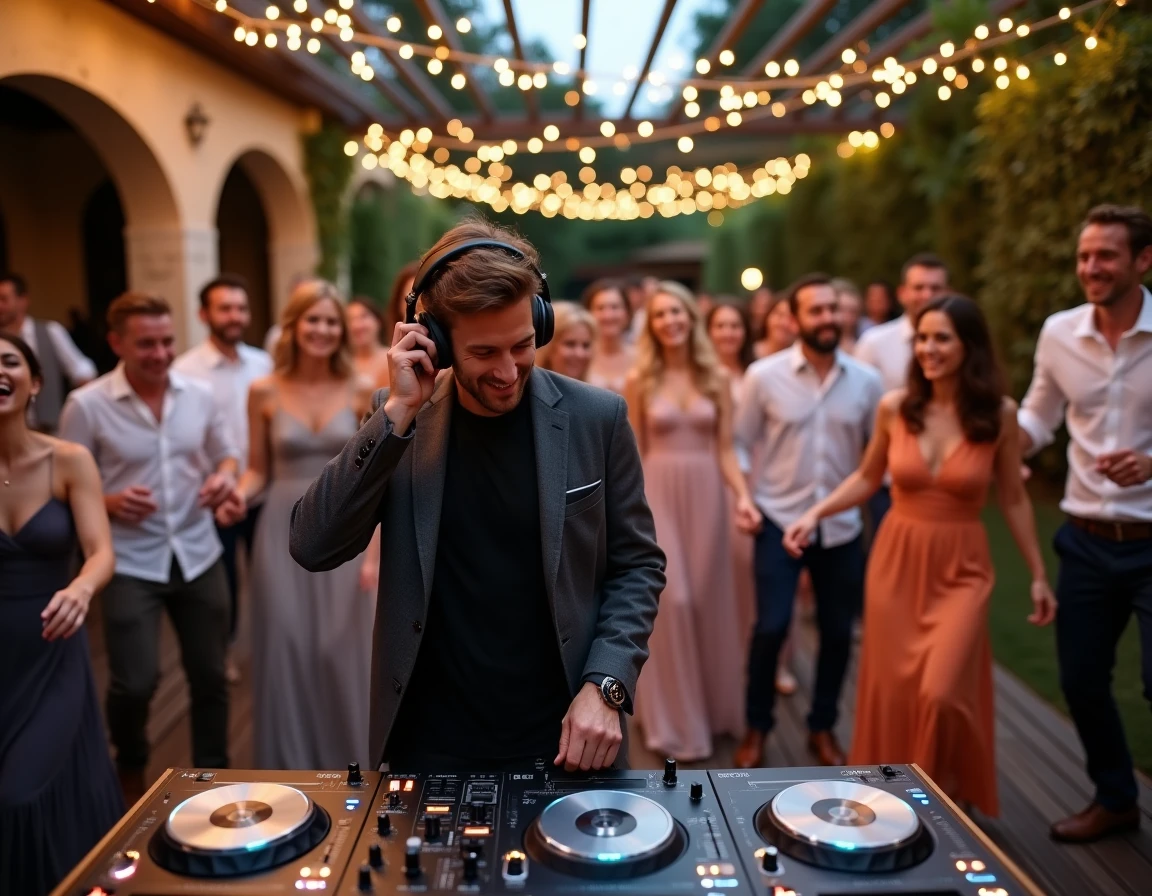
Field feedback also shows that hybrid formats are multiplying. Some providers now offer packages combining DJ, live orchestra, close-up, and shows. This multi-format offer avoids juggling multiple performers on the big day, but it requires checking that each component of the package truly matches your guests’ profile.
Sequencing entertainment throughout the evening
Most articles on the subject list ideas without ever addressing the timing issue. Yet, this is the factor that makes the difference between a smooth evening and a succession of awkward moments where no one knows what to do.
Cocktail hour: breaking the ice without forcing
The cocktail hour is the moment when guests get to know each other. Heavy entertainment (karaoke, surprise choreography) falls flat at this stage. Opting for lighter formats during the cocktail hour works better: a self-service photobooth, a game of famous couples distributed at the tables, or discreet close-up magic circulating among the groups.
Between courses: the underutilized slot
The wait between two courses is often when the energy drops. This is the ideal time for a retrospective video of the couple or a short blind test. The video indeed stands out as an entertainment format aligned with the meal’s progression, with montages projected at a specific moment rather than looped.
Limiting the total number of entertainment options to four maximum throughout the evening avoids a catalog effect. An evening already punctuated by speeches, meals, dancing, and conversations does not need twelve different activities.
After dessert: building intensity
The end of the evening calls for formats that get everyone on their feet. The game of twelve months, inspired by musical chairs, or a dance floor opening with a live orchestra reignites the energy when some guests start to tire. Fireworks or a release of biodegradable lanterns serve as a visual finale, but they require checking the venue’s regulations.
Wedding entertainment budget: items to quantify before signing
The cost of entertainment varies significantly depending on the chosen format. A self-service photobooth with accessories represents a moderate investment and operates throughout the evening without intervention. A professional magician or a live orchestra falls into a much higher price range.
The multi-format offer (DJ plus orchestra plus entertainment) provided by some vendors may seem economical at first glance. In practice, the final cost depends on the details of the included services, particularly the duration of each performance and the equipment provided. Comparing line by line with quotes from separate providers remains the only reliable method.
- Check if the provider includes sound and lighting in their rate, or if it is an additional charge
- Request a demo or video recordings of previous weddings to assess the actual atmosphere
- Confirm the exact performance times and any potential overtime fees
- Ensure that the venue allows the type of entertainment planned (sound volume, fireworks, outdoor installations)
Adapting entertainment to guest profiles
A wedding brings together different generations, extroverted personalities, and more reserved guests. Good entertainment does not force anyone to participate, but offers an accessible entry point for all.
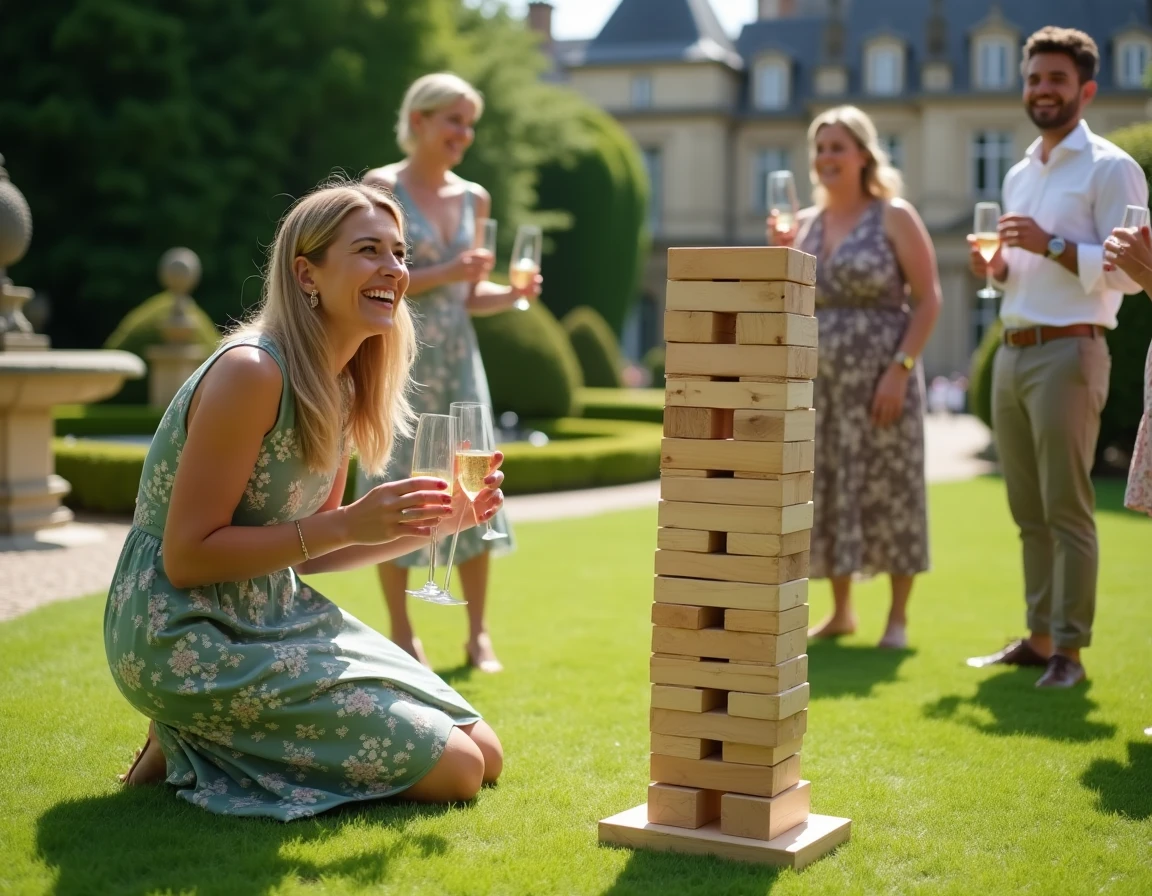
Team games like escape rooms or giant werewolf work well to mix groups. However, they exclude individuals with reduced mobility or very elderly guests if the activity requires moving around the venue. Planning at least one static activity (music quiz, video, creative workshop) ensures that every age group finds its place.
For children, a dedicated space with a babysitter and specific activities (coloring, face painting, board games) frees parents without creating frustration. Separating the children’s area from the dance floor avoids sound interference and accidents.
- Plan a creative workshop accessible from the cocktail hour to engage children early in the day
- Adjust the sound volume of musical entertainment if toddlers are present
- Offer at least one format that does not require physical mobility to include all guests
The choice of wedding entertainment relies less on the originality of the idea than on its coherence with the venue, the number of guests, and the rhythm of the evening. A music quiz timed between courses, close-up magic during the cocktail hour, a live orchestra after dessert: it’s the sequence that makes the evening, not the number of providers.